
What Is SIAM? (Service Integration and Management)
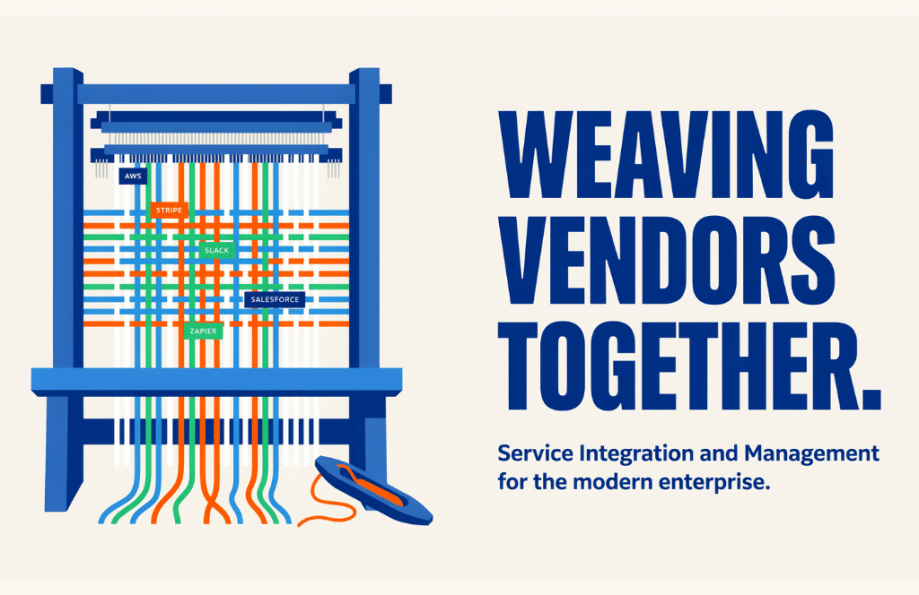
SIAM (service integration and management) is a framework for coordinating multiple vendors and service providers so they operate as one integrated service rather than disconnected contracts.
Most large organizations no longer buy IT from a single supplier. They have a cloud provider, a help-desk vendor, a security firm, a software partner, and a few others, each with its own contract and its own idea of “done.” SIAM is the discipline that brings all of that together, so a crowd of separate vendors behaves like one coherent service and the organization gets a single, accountable experience. The framework is maintained as a published body of knowledge, and it sits alongside the other project and service management approaches teams draw on.
What does a SIAM model do?
A SIAM model puts a coordinating layer between the organization and its providers. That layer, the service integrator, is accountable for making the whole thing work end to end, even though it does not deliver most of the services itself.
In practice a SIAM setup has three layers:
- The customer, who owns the outcomes and sets the standards.
- The service integrator, who coordinates all the providers, manages performance, and owns the overall experience.
- The service providers, who deliver the individual services under shared rules.
The service integrator can be the organization’s own team, an external partner, or a mix. What matters is that someone is accountable for the seams between vendors, not just the vendors themselves.
When do you need SIAM?
SIAM earns its keep once you have enough vendors that coordination becomes its own problem. A handful of suppliers can be managed with normal contracts and a few good relationships. A dozen, each touching the same services, is where the gaps appear: incidents that bounce between providers, unclear ownership, and no single view of who is delivering what.
If your teams spend more time figuring out which vendor owns a problem than fixing it, that is the signal. SIAM brings governance, shared standards, and one accountable integrator, which turns a tangle of separate contracts into a service that runs as one.
How is SIAM different from traditional vendor management?
Traditional vendor management handles each supplier on its own: one contract, one relationship, one set of service levels per vendor. It is vertical. Each vendor is managed in isolation.
SIAM is horizontal. It manages the space between vendors, the integration, so the providers operate as one service rather than a stack of separate ones. Vendor management asks “is each supplier meeting its contract?” SIAM asks “are all of them, together, delivering one good service?” The second question is the one that actually matters to the people using the service.
Where this connects to the work
SIAM lives mostly in IT and procurement, a step away from day-to-day project work, but the underlying need is one every coordinating team shares: a single, current view of who owns what and what is in flight across many moving parts. That is exactly what good portfolio visibility gives you. When cross-vendor work and its status live in one place instead of scattered across inboxes and trackers, coordination runs on shared facts rather than memory. Kobayashi uses Workzone as a single source of truth for active and planned work across its value chain, spanning product, marketing, and e-commerce, so coordination across functions runs on shared visibility rather than status chasing.
See cross-team visibility in Workzone →
Frequently asked questions
Frequently asked questions
What does SIAM stand for?
SIAM stands for service integration and management. It is a framework for coordinating multiple vendors and service providers so they function as one integrated service, with a coordinating layer accountable for the overall experience rather than each vendor in isolation.
Is SIAM part of ITIL?
SIAM is related to ITIL but separate. ITIL is a broad set of IT service management practices, while SIAM focuses specifically on integrating and governing multiple service providers. Many organizations use SIAM alongside ITIL, applying ITIL practices within a SIAM operating model.
What is the difference between SIAM and a PMO?
A PMO governs how projects are run across an organization, while SIAM governs how multiple service providers deliver as one integrated service. Both are coordinating functions, but a PMO is focused on project delivery and a SIAM model is focused on multi-vendor service delivery. Larger organizations sometimes run both at once.
What are the benefits of SIAM?
The main benefit is a single, accountable point of coordination across many providers, which means fewer incidents bouncing between vendors, clearer ownership, and a consistent standard of service no matter who delivers each piece. Done well, SIAM also makes it easier to add, swap, or retire a vendor without disrupting the whole, because the integration layer absorbs the change rather than passing it on to the business.
Is SIAM only for IT?
SIAM grew up in IT, where multi-vendor environments are common, and that is still where it is used most. But the core idea, coordinating many providers so they deliver as one service, applies anywhere an organization relies on a web of suppliers. The label tends to stay in IT and procurement, while the principle of one accountable integrator travels well beyond it.
Related reading: What Is a PMO?
Last updated on June 24, 2026
Want a Peak Inside Workzone?

Continue reading

Ready To See Workzone In Action?
Simple project management software with real people ready to help you get started.


